
When Sales and Marketing align

Most marketing teams can tell you their cost per lead within seconds. Far fewer can tell you, with confidence, how much pipeline those leads generated and how much of that pipeline closed.
That gap is not about effort or capability. It is almost always about structure. Without clean lifecycle stages and CRM-connected reporting, even strong marketing performance looks ambiguous at leadership level.
If you lead marketing, you already know that clicks and engagement matter for optimisation. The problem is that leadership does not evaluate marketing based on clicks. They evaluate it based on contribution to pipeline and revenue predictability. When marketing cannot clearly connect activity to those outcomes, trust erodes.
Proving ROI starts with clean lifecycle stages
Most CRMs include lifecycle stages such as Lead, MQL, SQL, Opportunity, and Customer. The structure looks solid in theory, but in practice the definitions are often vague, inconsistently applied, or ignored entirely. Records sit in “Lead” indefinitely. Sales updates stages based on personal judgment rather than shared criteria. Marketing builds reports on top of data that no one fully trusts.
If lifecycle stages are not clearly defined and consistently enforced, ROI reporting becomes unreliable.
You cannot accurately show how many leads progressed to qualified opportunities and then to revenue if the criteria for each stage are unclear. You cannot measure conversion rates between stages if teams interpret them differently. You cannot defend your numbers in a board meeting if half the database does not reflect reality.
Leadership does not care how many MQLs were generated if those MQLs were never truly qualified. They care how many became pipeline and how much of that pipeline closed. The only way to answer that confidently is to align lifecycle stages with real buying behaviour and ensure both marketing and sales operate under the same definitions.
This requires discipline. Opportunity criteria must be agreed upon. Mandatory fields must be enforced before deals move forward. Sales and marketing must share accountability for data quality. Without that, the CRM is little more than a contact database with decorative reporting layered on top.
Leadership cares about pipeline, not activity
Clicks, impressions, and open rates have their place in campaign optimisation. They help you refine messaging, adjust targeting, and manage spend. However, those metrics lose relevance in leadership conversations because they do not directly tie to revenue.
When reporting focuses on clicks or cost per lead, the discussion stays tactical. When reporting focuses on marketing-sourced pipeline, influenced revenue, and deal velocity, the discussion becomes strategic.
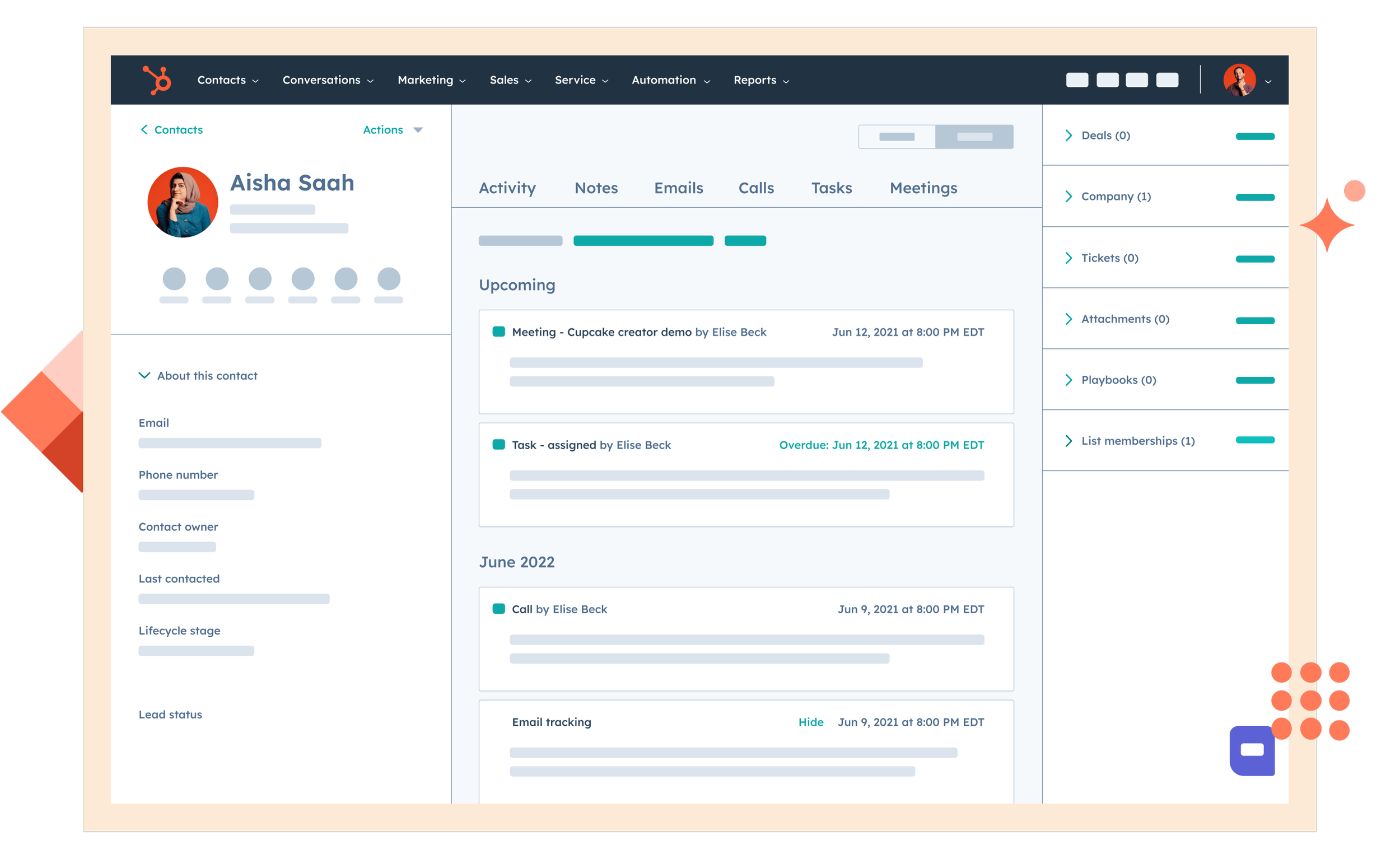
CRM-connected reporting allows you to show how marketing activity translates into opportunities and closed revenue. You can track channel performance not just by lead volume but by opportunity creation rate and close rate. You can analyse how long deals take to move from first touch to closed-won and where they stall along the way. You can quantify how changes in budget affect pipeline over time.
Leadership trusts numbers that align with the sales forecast. They question numbers that sit outside it. If marketing reporting is disconnected from the CRM and from sales data, it will always feel secondary.
From cost centre to growth lever
When marketing operates outside the CRM, it is perceived as a cost centre. Budget is allocated, campaigns are executed, and results are discussed in terms of activity. The link to revenue remains indirect.
When marketing is fully integrated with CRM data, it becomes part of the growth engine. You can demonstrate pipeline coverage ratios, compare marketing-sourced and sales-sourced revenue, and show how shifts in budget affect pipeline three to six months later. You can identify bottlenecks in the funnel and pinpoint where leads stall before becoming opportunities.
That level of visibility changes internal conversations. Budget discussions become grounded in contribution rather than opinion. Strategic planning becomes more precise because marketing performance is measured in the same language as sales performance.
Trust does not come from a visually impressive dashboard. It comes from consistency. The pipeline number marketing reports should match what sales presents. Revenue attribution should hold up under scrutiny from finance. Lifecycle definitions should be documented and understood across teams.
If you are under pressure to prove marketing ROI, resist the temptation to add more channels or produce more activity. Start by auditing your lifecycle stages and reporting structure. Ensure that every campaign ultimately connects to opportunity creation and revenue impact inside the CRM.
When your data tells a coherent story from first touch to closed deal, marketing no longer needs to defend its budget. It becomes clear, measurable, and trusted as a driver of growth.
