How to Choose the Right CRM for Your Business
If you've worked through our previous blog checklist on whether your business needs a CRM and landed on yes, this is the next question: which one and how to choose it.
The right answer isn't about which platform is most popular or what a sales rep recommends. It comes down to five things specific to your business:
How big your team is
How mature your sales process is
How much data and deal volume you're managing
What you can realistically spend
How comfortable your people are picking up something new
Get those five things clear and the right platform becomes obvious fairly quickly. Skip that step and you end up choosing based on guesswork, which is how a lot of CRM implementations end up half-used within a year.
Team size and process maturity

A two-person team closing deals through long-standing relationships operates completely differently from a team of six with defined handoffs between people. The first doesn't need much structure, the second falls apart without it.
This split tends to show up around the ten-person mark. Below that, a well-run spreadsheet usually still holds. Above it, most businesses move to a CRM fairly quickly. Smaller teams aren't tracking less, the problem a CRM solves just hasn't shown up yet at that size.
In property development, this shows up clearly. A principal working solo with a handful of referral partners doesn't need stage-by-stage pipeline tracking. A broker mentions a site that might be coming up. A landowner who's been thinking about selling for two years finally calls. None of that fits into a forecast with neat stages, it's relationship work that depends on remembering context across long timelines.
Once that same firm has three or four people each managing relationships across multiple active sites, the problem changes entirely. It stops being about remembering individual relationships and becomes about everyone seeing the same information without duplicating work or dropping a handoff between two people on the same deal.
Data and deal volume
How much you're tracking matters as much as team size. A handful of active relationships is manageable without much structure. A dozen concurrent projects, each with its own timeline and stakeholders, is a different problem entirely, and the platform needs to match that volume rather than the team size alone.
This is where volume turns into a money problem. Research from Harvard Business Review found that businesses contacting a new lead within an hour were about seven times more likely to qualify it than those who waited a bit longer. At low volume, a missed follow-up is one disappointing miss. At higher volume, with more sites and conversations moving at once than any one person can hold in their head, that same gap starts happening every week.
For a property firm, that's the difference between managing two or three site acquisitions, where missing a beat is annoying but recoverable, and juggling a dozen projects at once, where the same gap usually means a deal that was live has gone quiet without anyone noticing.
Budget and technical comfort
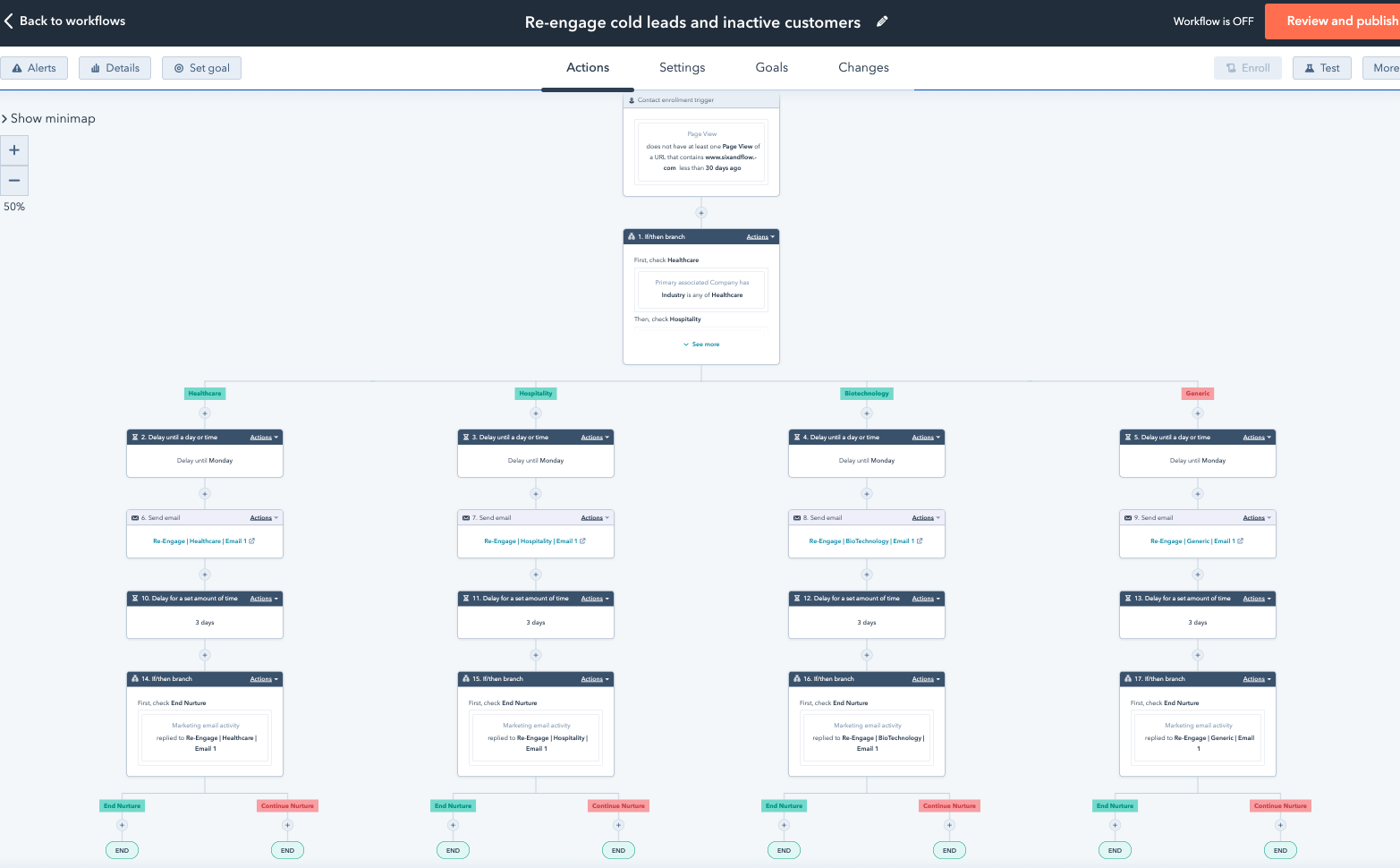
This is the variable that gets the least attention and often matters the most. A platform with deep reporting and automation only delivers value if your team has the time and the appetite to set it up properly and keep it maintained. We've seen firms commit to a heavier platform before they were ready for it, and end up spending more time in settings than talking to clients. That's the wrong outcome regardless of which platform it is.
More features only help if your team uses them. A simple system everyone opens beats a powerful one that gets half set up and quietly forgotten a few months in.
Where this typically lands
Put those variables together and a clear pattern shows up across the property and surveying firms we work with, and it holds in other industries too.
Attio tends to suit a lean team managing relationship-led work with a handful of active deals. It's quick to set up, flexible enough to match how those relationships develop, and doesn't ask a small team to learn something built for a huge operation.
HubSpot tends to suit a team running multiple projects with several people touching deals. Reporting across pipelines, automated follow-up that doesn't depend on memory, and structure for a growing team justify the extra setup time and cost once the volume is there.
This same logic plays out in financial advisory practices managing complex client relationships, and in early-stage SaaS businesses outgrowing a shared spreadsheet. The industry changes. The five variables that determine the right fit don't.
How we actually work this out with a business

Most of what's above is easier to see with someone walking through it alongside you than to work out alone. Before we recommend anything, we sit down and map the journey a lead actually takes to become a client. Not how it's supposed to work on paper, how it actually happens, every step, every handoff, every place where something currently depends on one person remembering.
That mapping session does most of the work the five variables above are trying to get at. Team size and process maturity show up naturally once you can see who touches a deal and when. Data and deal volume become obvious once the map shows how many things are moving at once. Budget and technical comfort come up as part of the conversation, not as a guess.
Once that map exists, the right platform is usually clear, because the choice isn't based on five abstract questions anymore, it's based on an actual picture of how the business runs.
Getting this wrong costs more than people expect
We've seen businesses overbuild, adopting a heavier platform before the team or process was ready for it. We've also seen firms stay on something too lightweight long after the volume of deals and people involved had outgrown it. Either way, the real cost isn't the subscription. It's the months spent migrating data and retraining a team a year later, which is a far bigger cost than getting an honest read on your situation now.
We work across HubSpot, Attio, and Folk, so we're not trying to steer you toward a particular platform. If you'd like to map your process with us and find out which one fits, reach out to us here or book a discovery call below.
