
Folk vs HubSpot: Which CRM Is Right for Your Business?
Choosing a CRM shouldn't mean paying for a mountain of features you'll never use, or picking something so simple that you've outgrown it before you've finished setting it up.
Folk and HubSpot take two quite different approaches to customer relationship management. Folk focuses on keeping relationship management simple, with minimal setup and maintenance. HubSpot brings sales, marketing and customer service together in a more comprehensive platform.
Neither is automatically the better choice. It comes down to what your business needs today, how you expect it to grow and how much of your customer journey you want your CRM to manage.
At Zippily, we work with businesses across New Zealand and Australia to find the right CRM for their needs. Here's how Folk and HubSpot compare on pricing, features, AI, ease of use and long-term scalability.
The short version: Folk vs HubSpot
- Choose Folk for simplicity: It's well suited to solopreneurs, freelancers and small teams who want to manage relationships and follow-ups without a lengthy implementation.
- Choose HubSpot for a connected customer platform: It brings sales, marketing and service tools together, with more advanced automation, reporting and integration capabilities.
- Folk is generally cheaper to get started with: Its simpler setup and lower entry cost make it attractive to small teams, although additional tools may be needed for marketing and other functions.
- HubSpot offers more room to scale: Businesses investing in dedicated sales and marketing functions can benefit from its broader capabilities, but should budget for subscriptions, implementation and ongoing management.
- Both can use AI to reduce manual work: Folk focuses on relationship management, while HubSpot offers AI capabilities across more of the sales and customer journey.
- You don't need to choose for life: Starting with Folk and migrating to HubSpot later can be sensible if your requirements change.
The bottom line: Folk is a strong option if you need a straightforward CRM that your team will actually use. HubSpot is worth considering when you need more sophisticated processes, automation and a connected view of the customer journey.
What is Folk CRM?
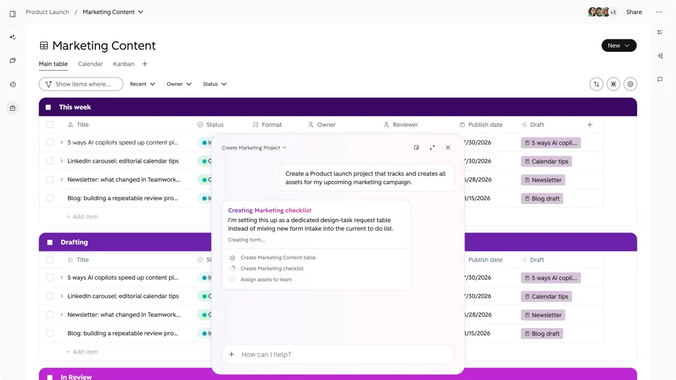
Folk is a lightweight CRM built in France for solopreneurs and small teams. It's designed to be usable in minutes rather than weeks, with a focus on reducing the effort involved in getting started and keeping contact records up to date.
When you first log in, Folk can connect with your inbox to bring in contacts, companies and existing conversations, helping you avoid starting with an empty database.
One of its standout features is its magic fields, which help surface follow-up opportunities and relationship insights without requiring users to log every interaction manually.
Folk also offers useful capabilities for teams managing relationships across different channels, including WhatsApp contact management, a LinkedIn browser extension for adding contacts, and contact and company enrichment.
The appeal is straightforward: less administration, less manual data entry and a CRM that's easier to maintain.
For a small team whose primary goal is to keep track of people, conversations and follow-ups, that simplicity can be a significant advantage.
What is HubSpot?
HubSpot is a customer platform that brings sales, marketing and customer service tools together around a shared CRM database.
That means a contact's website activity, marketing interactions, sales conversations and support history can be connected in one place, subject to the tools and features your business uses.
HubSpot's marketing capabilities are a particular strength. Depending on your subscription, these can include email marketing, social media management, SEO tools, lead scoring, website tracking, advertising integrations and marketing automation.
Its workflow builder also allows businesses to automate tasks, route leads, update records and trigger actions based on customer behaviour or changes in CRM data.
HubSpot connects with a broad range of third-party applications, making it a flexible option for businesses that want their CRM to sit at the centre of a wider technology stack.
The trade-off is complexity. HubSpot gives you more to work with, but getting the most from it requires thoughtful configuration, clear processes and ongoing management.
How much does Folk cost compared to HubSpot?
Folk is generally less expensive to get started with, particularly if you only need a CRM for a small team. HubSpot can cost more once you add paid sales and marketing functionality, implementation and other requirements.
However, the fairest comparison is between the tools your business actually needs, rather than the headline price of two different subscriptions.
Illustrative year-one cost comparison
The following figures are from the pricing estimates used in this comparison. They're indicative rather than live quotes and should be checked against current pricing before making a purchasing decision.
Year-one cost for five users
Folk
HubSpot
CRM licences
~$4,900 NZD
~$9,250 NZD
Email marketing
~$330 NZD for a separate tool
Free tools to start; paid Marketing Hub costs extra
One-off onboarding
$0
~$3,300 NZD equivalent
External implementation support
Usually not required for a basic setup
Varies by requirements
Setup effort
Potentially an afternoon
Weeks to months for a more comprehensive implementation
Illustrative year-one total
~$5,250 NZD
~$12,550 NZD plus implementation
Pricing note: These estimates use the original comparison's indicative figures, including a separate email marketing tool for Folk and an estimated HubSpot onboarding fee. They aren't a like-for-like quote. HubSpot's actual cost depends on the hubs, tiers, seats and onboarding arrangements you choose.
Folk's Premium and Enterprise plans have different feature limits and pricing. HubSpot also offers free tools and lower-cost Starter options, so you don't necessarily need to begin with Sales Hub Professional.
The important distinction is that Folk may cover your immediate CRM needs at a lower cost, while HubSpot can consolidate more of your sales and marketing activity into one platform.
If you choose Folk, factor in the cost of any additional tools you need for email campaigns, automation or reporting. If you choose HubSpot, factor in the time and expertise required to configure it properly.
Our advice: Compare the total cost of running your intended process, not just the licence fee.
Which is easier to set up: Folk or HubSpot?
Folk is generally easier to set up. HubSpot takes more planning, particularly when you're implementing multiple hubs, migrating data or building automation.
Folk: Get started quickly
Folk is designed to minimise the work involved in setting up a CRM. Connecting your inbox and bringing in existing contacts and conversations can give you a useful starting point without a lengthy implementation.
For a small team with straightforward requirements, you may be able to get the basics running in an afternoon.
That doesn't mean there's no configuration involved. You'll still need to organise your contacts, agree how you'll track relationships and establish a consistent approach to follow-ups. But the initial barrier to getting started is relatively low.
HubSpot: More capability, more decisions
HubSpot has a steeper learning curve. It has its own terminology, data structure and approach to managing customer relationships.
A good implementation needs to consider questions such as:
- How should contacts, companies and deals be structured?
- What qualifies a lead as a genuine sales opportunity?
- How should leads be assigned to the right people?
- Which activities should trigger automation?
- What information does the team need to report on?
- Which existing systems need to integrate with HubSpot?
If these decisions aren't made upfront, you can end up with a portal that looks impressive but doesn't properly support the way your business operates.
That isn't a reason to avoid HubSpot. It's a reason to invest the appropriate time in setup, training and process design.
For businesses with straightforward requirements, a lighter implementation may be sufficient. More complex environments can take weeks or months, depending on the scope.
Does Folk have marketing automation like HubSpot?
No. Folk is primarily a CRM rather than a comprehensive marketing automation platform.
It can support relationship management and personalised outreach, but businesses wanting more sophisticated campaigns and nurture sequences will generally need an additional marketing tool.
Depending on your requirements, that might mean connecting a platform such as Brevo, Mailchimp or Klaviyo.
HubSpot offers a more integrated approach. Depending on your subscription, you can run marketing campaigns, nurture leads, use lead scoring and build workflows alongside your sales pipeline and customer records.
For example, a business could use HubSpot to:
- Capture a lead through a website form.
- Send relevant follow-up emails based on their interests.
- Notify the appropriate sales representative when the lead meets agreed criteria.
- Create a deal when the lead becomes a qualified opportunity.
- Report on how marketing activity contributes to sales.
These processes can operate from the same CRM database, reducing the need to connect separate tools and reconcile data between them.
This is where HubSpot can become particularly valuable for growing businesses. As marketing and sales processes become more sophisticated, the ability to connect activity, automation and reporting becomes increasingly useful.
However, not every business needs that level of capability. If your main requirement is to manage relationships and send occasional personalised emails, Folk may be more than sufficient.
How do Folk and HubSpot compare on AI?
Both platforms use AI and automation to reduce manual work, but they approach the problem differently.
Folk focuses on making relationship management easier, while HubSpot offers AI capabilities across a wider range of sales, marketing and service activities.
Folk: Less manual relationship management
Folk's magic fields help users maintain relationship information and identify follow-up opportunities without manually recording every interaction.
Combined with contact enrichment and integrations, this helps reduce some of the administrative burden associated with keeping a CRM up to date.
For a small team, that can be more valuable than a long list of advanced AI features that nobody has time to configure.
HubSpot: AI across the customer journey
HubSpot's AI capabilities extend into sales conversations, CRM data management and deal management. Depending on your subscription and current feature availability, these may include:
HubSpot AI capability
What it does
AI Notetaker
Records, transcribes and summarises supported meetings, identifies action items and can help draft follow-up emails
Smart properties
Uses AI to generate structured information for CRM properties based on configured instructions and available record data
Deal Progression
Uses sales conversation information to suggest deal updates and next steps, where supported
Feature availability, usage limits and subscription requirements can change, so check the current HubSpot product documentation before relying on a particular capability.
At Zippily, we've found HubSpot's built-in AI tools useful enough to replace our separate Fathom meeting-notetaking subscription. That was a practical benefit for us, rather than simply another AI feature to experiment with.
If AI-assisted selling is important to your business, HubSpot's broader set of capabilities is worth investigating.
You can also read our free guide, The HubSpot AI Features We Actually Use, to see which tools we find genuinely useful in practice.
Folk vs HubSpot for New Zealand and Australian businesses
For businesses in New Zealand and Australia, the decision isn't just about features and pricing. Access to support, implementation expertise and training can also matter.
Folk is a global product with a European base. Depending on your issue and support arrangements, time-zone differences may make it less convenient to get assistance during the New Zealand or Australian working day.
HubSpot has an established Asia-Pacific presence and a large partner ecosystem across both markets. That makes it relatively straightforward to find local expertise for implementation, training, integrations and ongoing support.
For a small team that can manage its own CRM, this difference may not matter much. For a business undertaking a major implementation or relying on its CRM for day-to-day operations, access to local support can be an important consideration.
As a New Zealand-based HubSpot partner, Zippily helps businesses across New Zealand and Australia implement, optimise and maintain their CRM systems. We also help businesses assess alternatives when HubSpot isn't the right fit.
When should you choose Folk, and when should you choose HubSpot?
The right choice depends on your current requirements, team structure and growth plans.
Choose Folk if you're...
Choose HubSpot if you're...
A solopreneur, freelancer or very small team
A growing business with dedicated sales or marketing responsibilities
New to CRMs and want something straightforward
Planning to invest in marketing automation
Working with a tight budget
Looking for more advanced reporting and workflow automation
Mainly managing contacts, relationships and follow-ups
Connecting sales, marketing and customer service processes
Looking to get operational quickly
Building a broader technology stack around your CRM
Comfortable adding separate tools when needed
Looking to consolidate more functionality into one platform
One important caveat: team size alone shouldn't determine your choice. A small business with complex marketing requirements may benefit from HubSpot, while a larger consultancy focused on relationship management may find Folk perfectly adequate.
Start with the problems you need your CRM to solve, then work backwards to the features and costs.
Can you start on Folk and move to HubSpot later?
Yes. Starting with Folk and moving to HubSpot when your requirements become more sophisticated can be a perfectly sensible approach.
You don't necessarily need to invest in a comprehensive platform before you have the processes, people or budget to make use of it.
However, it's worth recognising the signs that your current CRM is becoming a limitation.
You might be ready to reconsider your options if:
- Your team maintains a spreadsheet on the side because the CRM can't support the way you work.
- You're paying for several disconnected tools and manually transferring information between them.
- You can't answer basic questions about lead sources, conversion rates or customer performance without exporting and combining data.
- Follow-ups are slipping because your current system can't reliably remind people or automate the next step.
- You've hired your first dedicated salesperson or marketer, and they're asking for capabilities your CRM doesn't offer.
- Your business needs more structured reporting, permissions or automation than your current setup can provide.
If two or more of these sound familiar, it's worth reviewing whether your current CRM is still the right fit.
A migration doesn't have to mean starting from scratch, but it does require planning. You'll need to consider data quality, field mapping, historical activity, integrations, user training and the processes that should change along the way.
The earlier you plan for those requirements, the easier it is to avoid carrying unnecessary complexity into the new platform.
Our verdict: Folk or HubSpot?
Folk and HubSpot serve different needs, and both can be the right choice.
Folk is a strong choice for smaller teams that value simplicity. It's designed to make relationship management easy to get started with and maintain. If you mainly need to organise contacts, track conversations and manage follow-ups, you may not need anything more complicated.
HubSpot is the stronger option when your business needs a connected customer platform. Its broader sales, marketing and service capabilities can support more sophisticated workflows, reporting and customer journeys. The trade-off is a greater investment in subscriptions, implementation and ongoing management.
The mistake is assuming that the most powerful CRM is always the best one, or that the cheapest CRM will always be the most cost-effective.
Choose the platform that fits the work you need to do today while giving you a sensible path forward as your requirements change.
Still comparing options? Our free Honest CRM Guide compares Folk, Brevo, Attio and HubSpot, including a decision guide and year-one cost breakdown. You can also read our Attio vs HubSpot comparison if you're considering another flexible CRM option.
Frequently asked questions
Is Folk better than HubSpot?
Folk is often a better fit for solopreneurs and small teams that want a simple CRM with minimal setup. HubSpot is generally better suited to businesses that need integrated sales, marketing and service tools, advanced automation and more comprehensive reporting. The right choice depends on your requirements and growth plans.
Does Folk CRM have a free plan?
Folk's plan structure and pricing should be checked on its current pricing page, as these can change. HubSpot offers free CRM tools, which can be a useful starting point for businesses that want to explore the platform before committing to a paid subscription.
Is HubSpot worth it for a small business?
HubSpot can be worth the investment for a small business that needs marketing automation, structured sales processes, integrated reporting or a platform that can support future growth. For a solo operator who mainly needs to manage contacts and follow-ups, a lighter CRM such as Folk may be a better fit.
Can Folk send marketing emails?
Folk supports relationship management and personalised outreach, but it isn't a full marketing automation platform. Businesses that need newsletters, campaigns or automated nurture sequences will generally need a separate email marketing tool or a platform such as HubSpot with the appropriate marketing functionality.
How long does it take to set up Folk compared to HubSpot?
Folk can often be configured for basic use in an afternoon, particularly when importing contacts and conversations from an inbox. A more comprehensive HubSpot implementation can take weeks or months, depending on data migration, integrations, automation and process complexity. The exact timeframe depends on the scope of the project.
Is Folk good for businesses in New Zealand and Australia?
Folk can be a suitable CRM for New Zealand and Australian businesses that need straightforward relationship management. Consider support availability and time-zone differences when evaluating your options. HubSpot also has an established regional partner ecosystem, making local implementation and training support easier to access.
Can I migrate from Folk to HubSpot later?
Yes. You can migrate relevant contacts, companies and other supported data from Folk to HubSpot, although the scope depends on your data structure, export options and integration requirements. Plan for data mapping, duplicate management, historical activity, automation and user training before migrating.
Still not sure? Book a free 30-minute CRM fit call with Zippily. We'll ask a few questions about your business, help you understand the trade-offs and recommend the platform we think fits your needs, even if it isn't HubSpot.

Written by
Sean Towson
Managing Director / Senior HubSpot Specialist